Camden Council has finally submitted a planning application, registered 1st July 2025. The period for ‘comment’ is until 3rd August- only one month. The Better West Kentish Town coalition is campaigning to raise awareness of the application. Please email them to find out more (betterwkt@gmail.com), and see the following website for more information: https://neighboursofwestkentishtown.org/2025-planning-application/
Planning permission is being sought for the whole masterplan (Outline application), with a Detailed application for the first 2 blocks. You can tell the detailed blocks in the model view below- they have a bit more detail showing: the block facing onto Queen’s Crescent and the block next to the railway viaduct on Athlone Street. If approved the whole masterplan would get the go-ahead. The floor space is quadrupled and the height increased from 3-4 storeys to up 15/16 storeys (51m), and it does not relate to the context of Kentish Town.

Here are some answers to some questions:
There are currently 316 flats on West Kentish Town Estate. In 2019 when the Council decided to proceed with the demolition and rebuild there were 263 social rent homes and 53 leasehold homes (about half of which were privately rented).
Since then the Council has been moving secure tenants out of the estate, and there are now 70 flats which are either empty or being used as ‘temporary accommodation’. This is despite the promise that residents would be kept on the estate during the regeneration process. Loss of family homes at Bacton estate have already contributed to the closure of two local primary schools (St Dominics and Carlton). Our schools are now in crisis due to falling numbers of children.
The proposed scheme has 856 new homes, 530 for private sale and 326 social rent. The previously proposed Intermediate tenure homes have been omitted. Here is the tenure breakdown:
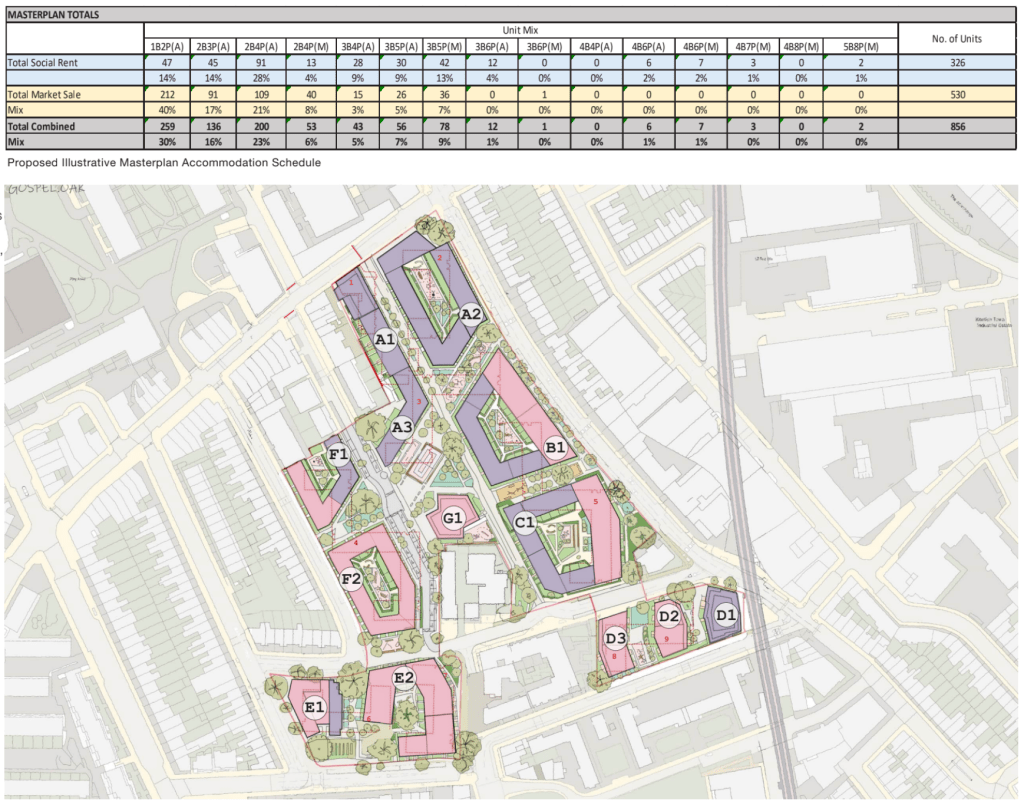
It is inevitable that many of the private sale flats will end up in the Private Rented Sector, being let out at high rent by absentee owners. This will drive up the cost of housing in the local area.
Of the overall 856 dwellings only 25% are suitable for families (3-bedroom or larger). This will not address the housing crisis or help Camden’s schools recover. Public land must be used for public good and that means more social-rent and key-worker housing.
In addition the distribution of tenure is segregated, with most social-rent homes (shown in purple above) either in the central, most dense and overshadowed part of the development (facing Hawkridge Tower), or overlooking the railway viaduct.
The courtyards of the new blocks are shown in the planning documents not to receive the required amount of sunlight.
50% of the mature trees will be cut down (around 60). This will reduce the cooling effect of the existing trees on the estate, which benefits the whole neighbourhood. The crammed together blocks will create a ‘heat’-island’, with risk to human health and well being.
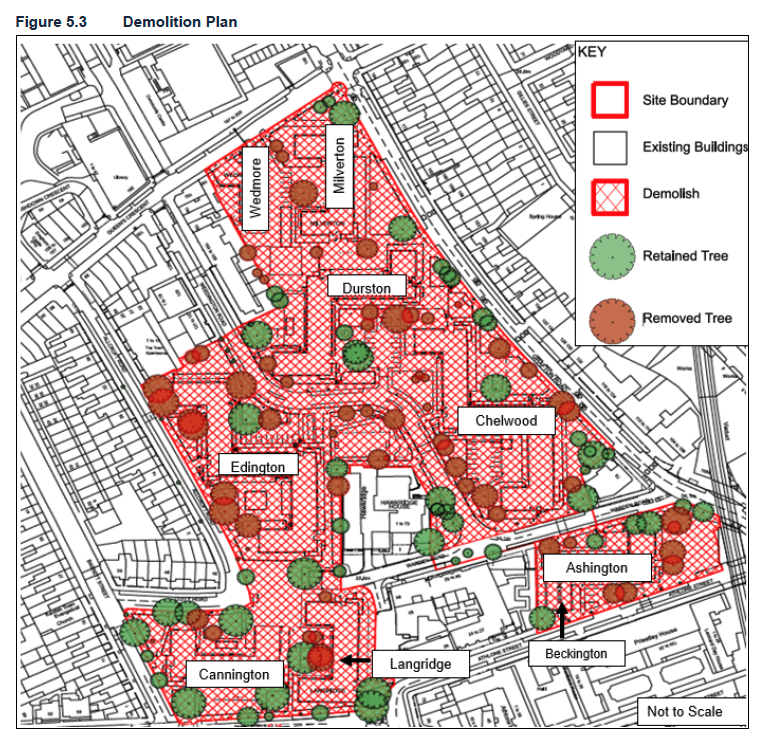
The cost of the demolition and rebuild scheme is £600m, which is an excessive amount and represents a huge amount of construction resources, causing 67,000 tonnes CO2e.
There was a residents’ ballot in 2020, which approved the scheme, with a high proportion in favour. However, there was not alternative provided in the ballot- it was ‘accept the scheme or nothing will be done to improve the estate’. Some of these residents have since moved away from the estate. Others are now supporting the idea of Retrofit and Infill, which would provide good homes more quickly, without destroying the green spaces and trees. See details of a possible retrofit scheme here.
The funding model for Camden’s proposal is partly through the ‘Cross-subsidy model’, where the receipts from selling the private homes pays for rebuilding the social homes. It typically requires profit from 3 private homes to pay for the construction of a social home (typical build cost in Camden £450,000). However, the ratio here is much less (60:40 by floor area), due to the funding provided by the GLA. The new social homes are mostly funded by public money.
Public money could be used to pay for a Retrofit and Infill scheme, which would cost much less at £155m (£450,000 per home). That is about a quarter of the cost of the demolition and rebuild scheme at £600m (£700,000 per home).
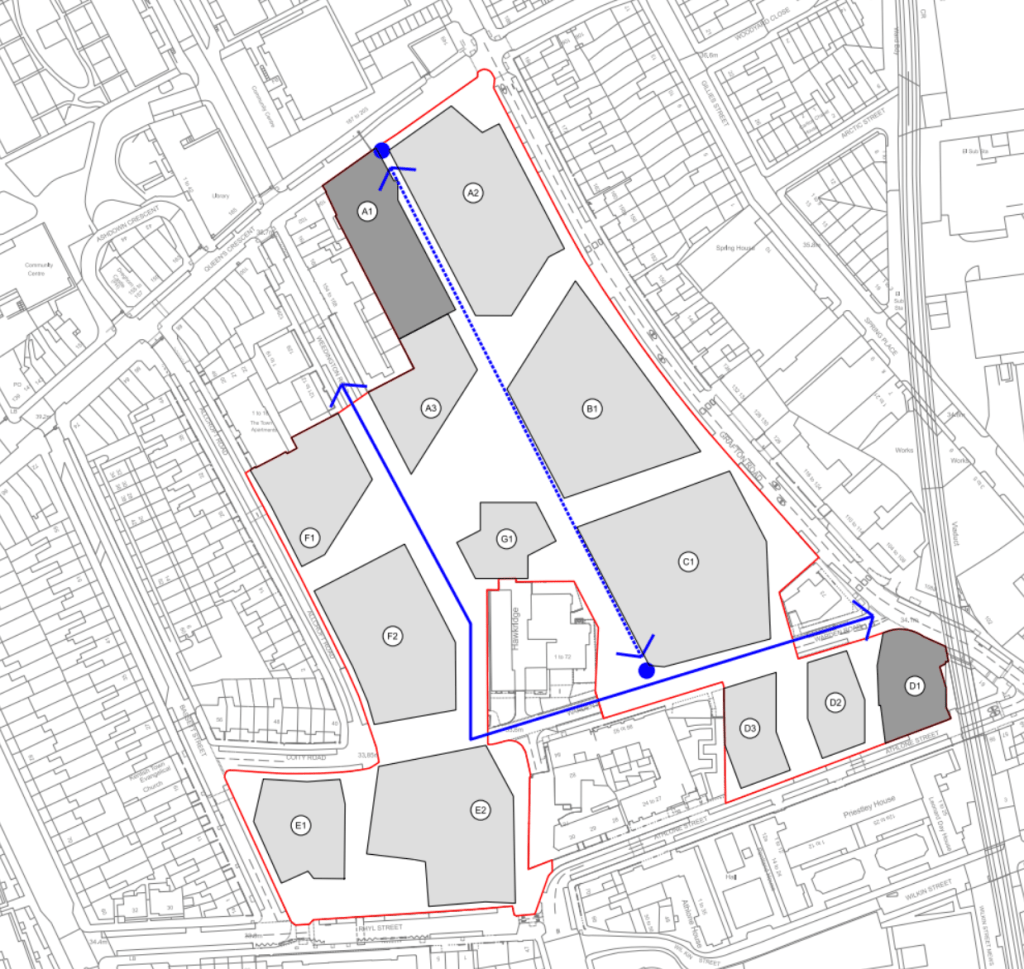
Like the current Queen’s Crescent highway works, the proposed scheme is very wasteful of public money. It proposes grubbing up the existing road (Weedington Road) and green space, and then building a new road and ‘green space’, mostly planter beds. The existing Weedington Road could be retained if the blocks were a bit smaller. As proposed the new road network (the blue lines in the diagram below) is incredibly awkward and dangerous, with poor sightlines:
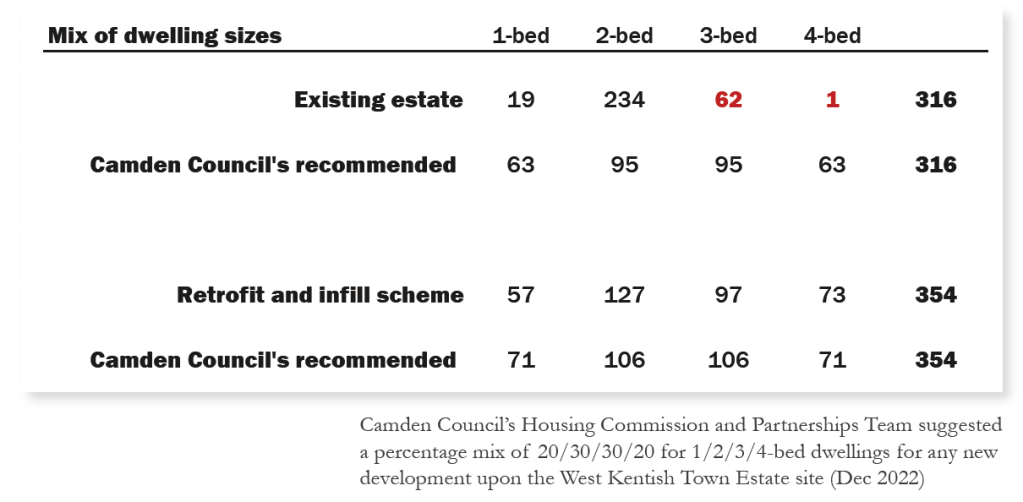
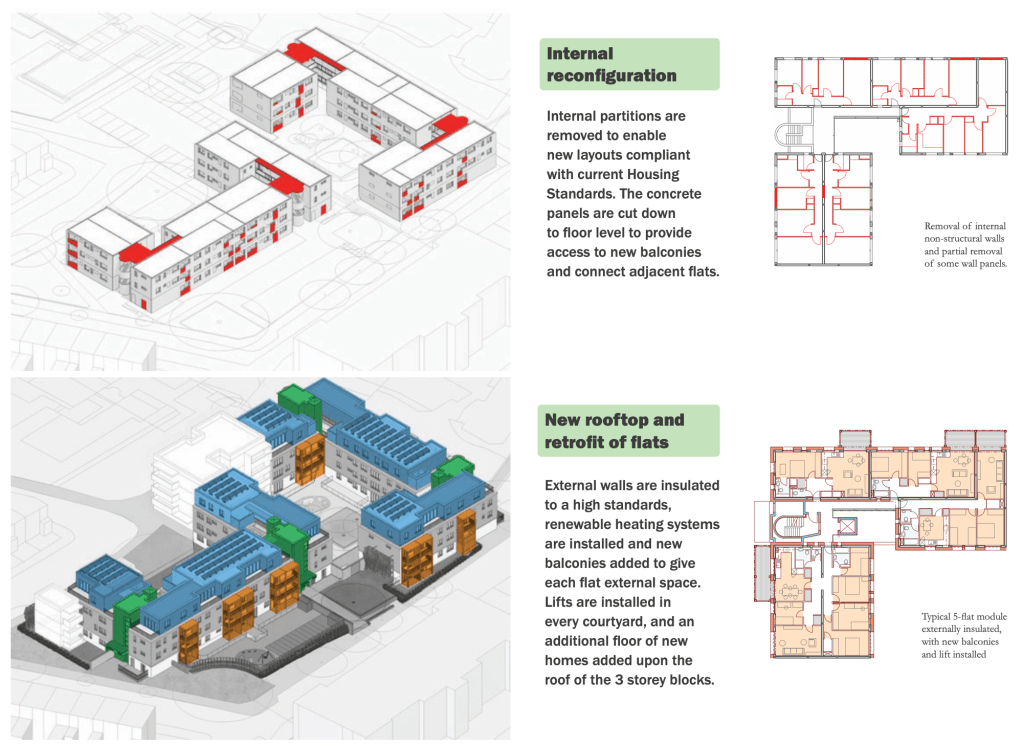
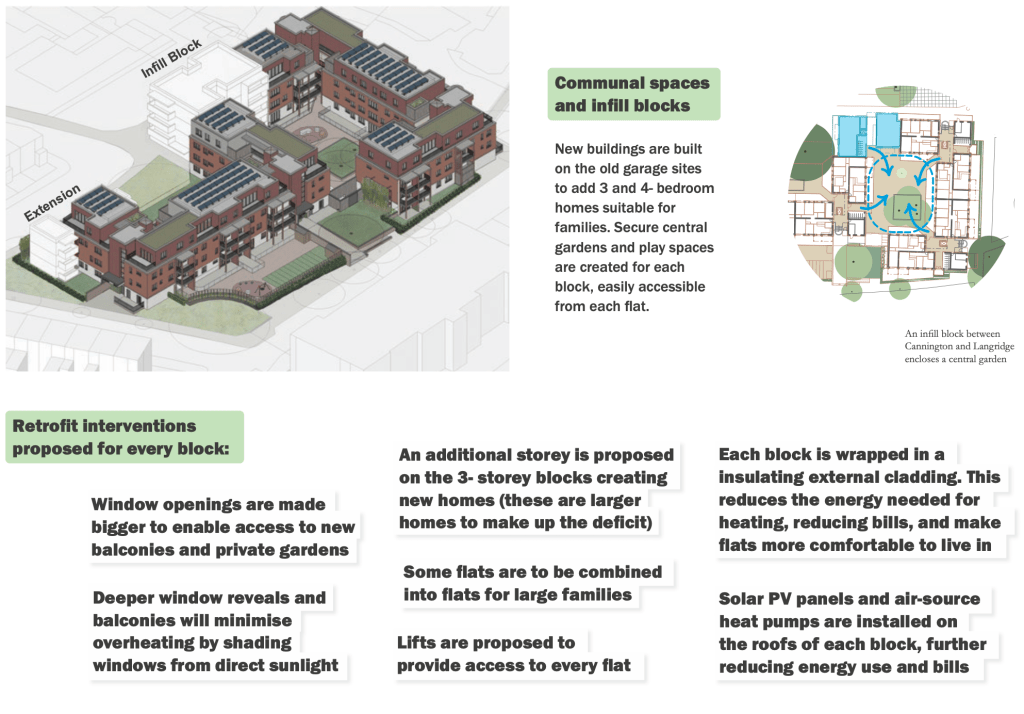
The retrofit scheme and infill scheme (developed as part of a RIBA funded research project) could be delivered in half the time and would provide 354 homes:
- 232 retrofitted homes (replanned and fitted out to current space standards)
- 42 new homes on top of existing three storey blocks
- 80 new homes in infill blocks
These would provide a good range of flat sizes compliant with the Council’s own requirements, which the new build scheme does not do (it has 30% of social rent homes being 1-bedroom flats instead of the recommended 20%).
Retrofit or not, Camden must reduce the scale of this development and prioritise the homes that local people need.
There is more information about the impact of Camden’s proposed scheme- including views- on this webpage https://neighboursofwestkentishtown.org/2025-planning-application/.
 West Kentish Town